Effective O-Level Chinese Tips Every Student Needs to Know


The O-Level Chinese examination can feel overwhelming for many students, but with proper preparation, reaching the desired results is entirely achievable. As an important part of the secondary education system, the exam assesses a range of language skills, including listening, oral communication, reading comprehension, and writing.
This guide provides practical tips to help students prepare for each section of the exam: Paper 1 (Writing), Paper 2 (Language Usage and Comprehension), and Paper 3 (Oral and Listening). By making use of focused tuition, quality study resources, and effective exam strategies, students can build their confidence, sharpen their skills, and feel fully prepared to do their best on exam day.
SECTION 1: UNDERSTANDING THE O-LEVEL CHINESE PAPER
- Paper 1: Writing (写作)
- Paper 2: Language Usage & Comprehension (语文应用与阅读理解)
- Paper 3: Oral Communication & Listening Comprehension (口试、听力理解)
SECTION 2: COMMON MISTAKES IN THE O-LEVEL CHINESE EXAMS
SECTION 3: TIPS FOR EXCELLING IN THE O-LEVEL CHINESE EXAMS
- Paper 1: Writing (写作)
- Paper 2: Language Usage & Comprehension (语文应用与阅读理解)
- Paper 3: Oral Communication & Listening Comprehension (口试、听力理解)
- General Exam Tips
O-Level Chinese Exam Format: Duration, Sections & Mark Allocation
1160 CHINESE GCE ORDINARY LEVEL (2026) / 新加坡剑桥普通教育证书(普通水准)会考 华文 (1160)
| Components / Scope | Marks & Weightage | Duration |
|---|---|---|
| Paper 1: Writing (写作)
Includes two sections: Situational Writing and Essay Writing. Candidates may use dictionaries approved by SEAB. |
60 marks (30%) | 2 hours |
| Paper 2: Language Usage & Comprehension (语文应用与阅读理解)
Includes Language Usage, Comprehension I (MCQ), and Comprehension II (Open-ended), with a total of 30 questions. |
70 marks (35%) | 1 hr 30 mins |
| Paper 3: Oral Communication (口试)
Includes passage narration and video conversation. Candidates have 10 minutes before the exam to review the passage and video clip. |
50 marks (25%) | Approx. 15 mins |
| Paper 4: Listening Comprehension (听力理解)
Includes 3 short dialogues or passages and 3 texts with 10 MCQs on daily conversations, advertisements, instructions, stories, and news reports. |
20 marks (10%) | Approx. 30 mins |
1116 HIGHER CHINESE GCE ORDINARY LEVEL (2026) / 新加坡剑桥普通教育证书(普通水准)会考高级华文(1116)
| Components / Scope | Marks & Weightage | Duration |
|---|---|---|
| Paper 1: Writing (写作)
Includes two sections: Situational Writing and Essay Writing. Candidates may use dictionaries approved by SEAB. |
80 marks (40%) | 2 hours |
| Paper 2: Language Usage & Comprehension (语文应用与阅读理解)
Includes close passage, sentence correction, Comprehension I (MCQ), Comprehension II (Open-ended), and summary writing. |
80 marks (40%) | 1 hour 45 mins |
| Paper 3: Oral Communication (口试)
Includes an oral report and discussion. Candidates have 10 minutes before the exam to watch a video clip, prepare their report, rewatch the video, and take notes. |
40 marks (20%) | Approx. 20 mins |
Paper 1: Writing (写作)
Paper 1 assesses writing skills but differs between the two syllabuses. In G3 Chinese O-Level (1160), students write an email (150 words or more) and an essay of at least 300 words, choosing from narrative, expository, or argumentative formats. In the Higher Chinese O-Level (1116), the practical task is longer (220+ words) and may be an email or forum post, while the essay requires 500+ words and may include speech writing in addition to narrative, expository, and argumentative essays. Success in both papers depends on clear organisation, accurate language, and logical expression of ideas.
One of the most effective O-Level Chinese tips for Paper 1 is to have a clear essay structure, ensuring that ideas are organised logically and supported with accurate language. Success in both papers depends on coherent planning, precise expression, and well-developed arguments.
Types of Compositions Tested:
-
Functional Writing 实用文:
Students in the G3 Chinese (G3华文) stream are required to select one of the following two options: an informal email or a formal email. Students in the Higher Chinese (高级华文) stream are required to select one of the following two options: a situational email or a letter to the forum. Each format necessitates the incorporation of key writing points, the adoption of an appropriate tone, adherence to accurate formatting, and the maintenance of content clarity. Success in functional writing comes from understanding the purpose and audience of each format.
-
Essay Writing 作文:
Students are required to begin by carefully reading and analysing the question, after which they should select one of the three essay types:
-
Narrative Essay (记叙文)
Through narrating a complete story, students should portray characters, emotions, and plot development. The content must align with the requirements of the prompt, present an original central idea, and ensure the plot is coherent with ups and downs. The ending should flow naturally, present a clear and logical structure, highlight the main point, and remain engaging.
-
Expository Essay (说明文)
Expository essays require a structured explanation of a topic, presenting factual information in a clear, organised manner, while also allowing students to express their own opinions. Students should ensure each point supports the main idea, making complex information accessible to the reader.
-
Argumentative Essay (议论文)
In this essay, students must take a clear stance and defend an issue. A strong argumentative essay requires critical thinking, logical reasoning, and well-supported arguments to persuade the reader effectively. For those taking Higher Chinese, this skill also extends to speech writing (演讲词), where students must present arguments convincingly in both written and spoken form.

Paper 2: Language Usage and Comprehension (语文应用与阅读理解)
Paper 2 of the O-Level Chinese examination assesses a range of language skills, though the scope differs between the two syllabuses. In Chinese O-Level, students complete close passages, word replacement exercises, and two sets of reading comprehension questions based on practical and literary texts. In Higher Chinese O-Level, the paper includes close passages, error correction, two reading comprehension passages, and an additional summary task of about 80 words.
To succeed in Paper 2, one crucial O-Level Chinese tip is to refine skills in vocabulary, grammar, and critical analysis, since both syllabuses test not only language use and command, but also the ability to interpret and infer accurately.
Understanding the Paper 2 Structure
Paper 2 is divided into multiple components, each targeting different language abilities. The Chinese syllabus emphasises practical usage and comprehension of shorter texts, while the Higher Chinese syllabus expects deeper analysis and synthesis. Another O-Level Chinese tip is to familiarise yourself with the exact requirements of each section. This helps students approach the paper with a clear strategy, organise their time effectively, and answer with precision.
Sections of Paper 2:
-
Vocabulary Section
The vocabulary section tests students’ understanding of words and phrases in various contexts. Chinese Language question types include: close passages and word substitution, whereas Higher Chinese Language question types include: short passage completion and sentence error correction. Regular reading and memorising vocabulary from textbooks are key. It’s important not only to recognise words but also to practise using them in sentences to improve flexibility and accuracy.
-
Grammar Section
The grammar section assesses students’ grasp of Chinese grammatical structures. This includes sentence construction, word order, and correct tenses, conjunctions, and particle application. A strong understanding of standard grammar rules is essential, as is the ability to apply these rules both in writing and in spoken forms. Students should practise identifying and correcting grammatical errors, ensuring they can apply these rules precisely in a variety of contexts. Regular grammar exercises help to build accuracy and fluency in the language.
-
Comprehension Segment
The grammar section assesses students’ understanding of Chinese grammar, including sentence structure, word order, and correct use of tenses, conjunctions, and particles. A solid grasp of grammar rules is essential, as is the ability to apply them in both writing and speaking. Regular grammar practice helps build accuracy and fluency.
-
Synthesis Section
In the synthesis section, students are required to integrate information from multiple sources to construct a coherent, logically organised, and comprehensive response, adhering to the key points for high-scoring answers. They may need to compare viewpoints, draw conclusions, or propose solutions based on the text. Understanding the scoring criteria and practising synthesis techniques will help students present well-organised, logical answers.
Paper 3: Oral and Listening Comprehension (口试与听力理解)
Oral and listening comprehension can be among the most challenging parts of the O-Level Chinese examination, but the format differs across syllabuses. In Chinese O-Level, Paper 3 includes reading aloud, a conversation based on a video stimulus, and a separate listening comprehension component. In Higher Chinese O-Level, Paper 3 focuses solely on oral skills, requiring students to deliver a short presentation after viewing a video and then participate in an examiner-led discussion.
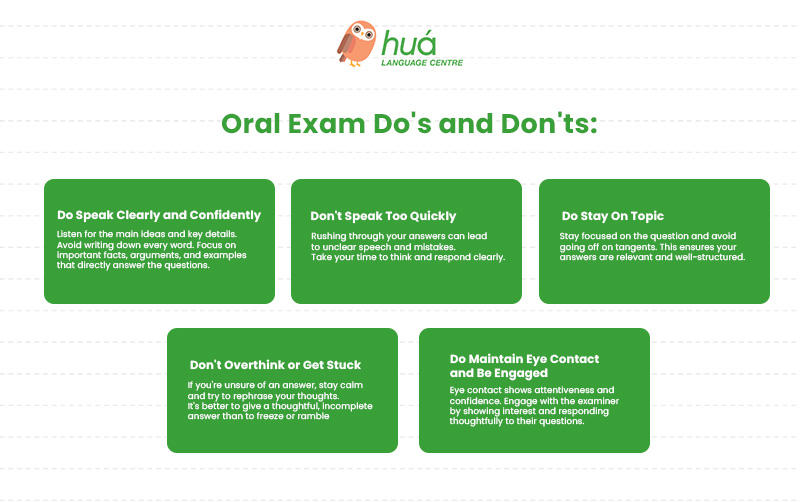
Both formats demand fluency, clear pronunciation, and quick thinking. With regular practice and targeted preparation, students can strengthen their listening and speaking abilities and approach this paper with greater confidence.
Overview of Oral and Listening Components
I. Oral Test Format
The oral test includes passage narration and a conversation segment for Chinese Language, as well as an oral report and conversational communication for Higher Chinese Language. In the passage narration section, students read an excerpt fluently, testing pronunciation and clarity. The conversation section involves a dialogue where students respond to questions and discuss topics, assessing their ability to converse naturally in Chinese.
To do well, students should focus on clear pronunciation, confidence, and fluid responses. Regular speaking practice with feedback from tutors or peers is an effective O-Level Chinese tip for improving delivery and overall performance.
II. Listening Comprehension Structure
In the listening comprehension section, students listen to audio passages and answer questions based on what they hear. These questions test their ability to grasp main ideas and details, including inferring meaning from context.
The challenge lies in processing spoken Chinese in real time. Developing good listening habits and practising with different audio materials helps students become more familiar with the pace and nuances of spoken Chinese. An effective O-Level Chinese tip is to engage in mock tests, including oral assessment tests, as commonly provided by Chinese tutoring centres, to simulate the actual exam environment.
Common Mistakes in the O-Level Chinese Examination
After understanding the structure of each paper, it is equally important to recognise the common mistakes that can affect performance. Many of these errors occur when students rush through questions, misunderstand the requirements, or focus too heavily on complex language rather than clarity. Being aware of these pitfalls helps students approach the Chinese and Higher Chinese O-Level examinations with greater precision and confidence.
1. Weak Grammar and Sentence Flow
Students sometimes attempt to use lengthy or complicated sentences to sound impressive, which often leads to grammatical errors and unclear expression. Clear, fluent sentences with proper structure allow ideas to be conveyed naturally and effectively.
2. Losing Focus on the Question
Drifting away from the main topic or misinterpreting the question is a frequent issue. Effective planning before writing or answering ensures that every point remains relevant and connected to the prompt, resulting in a more coherent and focused response.
3. Rushing Through Comprehension Passages
In Paper 2, students occasionally read too quickly and overlook key details in the text. Careful reading and attention to context, tone, and intent enable more accurate answers supported by relevant evidence from the passage.
4. Character and Spelling Errors
Frequent character or spelling mistakes can make responses harder to understand and lower overall marks. Consistent writing practice, reviewing commonly confused characters, and maintaining neat handwriting contribute to accuracy and clarity.
5. Unclear Oral Responses and Pronunciation Issues
During the oral examination, unclear or disorganised responses and tonal inaccuracies can hinder communication. Concise, well-structured answers delivered with accurate pronunciation reflect stronger fluency and confidence.
6. Losing Focus in Listening Comprehension
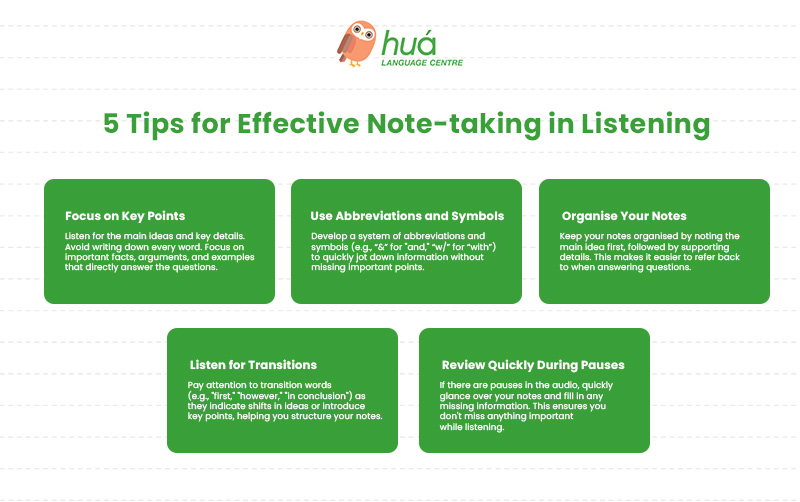
A lapse in concentration during the listening test can lead to missed information. Maintaining focus, taking concise notes, and engaging in regular timed listening exercises improve comprehension skills and recall.
Recognising these common mistakes allows students to refine their preparation, strengthen their language skills, and perform more confidently across all components of the O-Level Chinese examination.
Tips for Excelling in the O-Level Chinese Examination
Once students are aware of common mistakes, the next step is to apply effective strategies to improve their performance. These O-Level Chinese tips focus on clarity, time management, and confident expression across all the papers.
Writing (Paper 1)
Choosing the right topic is key. Selecting one that feels familiar allows ideas and examples to flow naturally. Narrative essays benefit from personal experiences, while argumentative essays, especially in Higher Chinese, require solid reasoning and relevant examples.
Practising all essay types builds flexibility and confidence. Students should spend a few minutes planning before writing to ensure their structure is clear and their ideas are connected. A brief outline helps avoid going off-topic.
Strong vocabulary improves clarity. Keeping a list of useful words and idioms encourages natural expression without overcomplicating the language.
Language Use and Comprehension (Paper 2)
Paper 2 rewards accuracy and analysis. Students should read carefully, identify keywords, and support their answers with evidence from the text. Recognising question types, factual, inferential, or opinion-based, helps students craft more accurate and well-structured answers.
Time management matters. Skim for main ideas before reading in detail to stay focused and maintain a balanced perspective throughout the paper.
Oral and Listening (Paper 3)
Regular speaking practice helps build fluency and confidence. Clear pronunciation and correct tones leave a positive impression. Listening to Chinese news or audio clips sharpens comprehension of different speaking speeds and accents.
Higher Chinese students can practise short, timed oral presentations to improve clarity and structure.
General Exam Tips
Use only SEAB-approved items, such as a basic analogue or digital watch. Rely on the exam room clock for time management. A simple plan for each paper helps prevent rushing and allows time for review.
Staying calm is equally important. Taking a few deep breaths before starting can steady nerves and improve focus.
With consistent practice and smart preparation, students can approach the O-Level Chinese examination with greater confidence and control.
The Role of Chinese Tuition in Exam Preparation
Higher Chinese tuition can significantly enhance performance in Paper 1 by refining students’ writing and analytical skills. With targeted exercises and personalised feedback, Chinese tutors help students organise their thoughts logically, choose precise vocabulary, and select content that directly addresses the essay question. Regular practice across different essay types also builds confidence and adaptability when facing new prompts.
For overall exam readiness, Chinese tuition for secondary school provides structured guidance and repeated exposure to the exam format. Working with experienced tutors familiar with O-Level requirements allows students to refine their grammar, comprehension, and writing techniques more effectively.
This focused approach not only enhances technical skills but also boosts confidence. With steady support from tutors and consistent practice, students can enter the O-Level Chinese and Higher Chinese examinations feeling prepared and self-assured.
Questions You Might Have
Here are some commonly asked questions about the O-Level Chinese exam:
1: How should I allocate study time for each paper?
When planning your study time, focus on your strengths and weaknesses. Spend more time on areas you find challenging. For example, if Paper 1 (Writing) is difficult, dedicate about 60% of your study time to it, 30% to Paper 2 (Language Use and Comprehension), and 10% to Paper 3 (Oral). Mix your study methods by practising essays, working through past papers, and engaging in conversations. Don’t forget time for review to reflect on your progress and make adjustments as needed.
2: How do I know if I need Chinese tutoring?
If you’re struggling with advanced topics like grammar, complex texts, or essay writing, extra O-Level Chinese tuition might be helpful. Tuition is also useful if you’re aiming for a higher grade or considering higher Chinese in the future. If you’re feeling overwhelmed or not reaching your desired grades, experienced tutors can offer personalised support and strategies to help you succeed.
3: How can I improve my performance in comprehension sections?
To improve in comprehension, practice regularly and get familiar with different question types. Read a range of Chinese texts, articles, stories, and poetry, to build vocabulary and exposure to various writing styles. While practising past papers, focus on understanding the main ideas and details. Developing summarisation skills can also help clarify your understanding. If you find certain passages difficult, discussing them with tutors or peers can provide valuable insights.

Effective preparation for the O-Level Chinese exam is crucial for success and building confidence in language skills. By understanding each paper’s requirements, using targeted study strategies, and choosing the right resources, students can improve their performance and approach the exam with confidence. With the right approach, every student can unlock their full potential in mastering the Chinese language.
At Hua Language Centre, we recognise that every student is unique, and personalised support is needed for overcoming challenges and reaching academic goals. Our experienced tutors offer tailored lessons in writing, comprehension, and oral skills to help you excel in Chinese. If you’re preparing for the O-Level Chinese exam, our customised tuition plans will strengthen your language skills and boost your confidence.
Visit our website today to explore our programmes and take the first step toward success.